
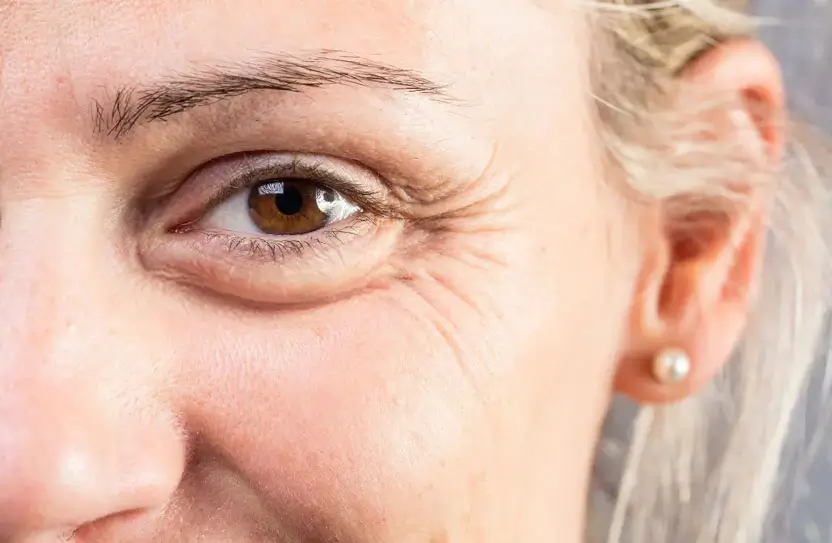
How to Get Rid of Wrinkles Under the Eyes When Smiling
Medically reviewed by Dr. Michael Paltiel, MD, Board-Certified Dermatologist | Last Updated: September 2026
The lines that fan out under your eyes when you smile are dynamic wrinkles. They come from a small muscle that squeezes every time you smile, laugh, or squint. To soften them, start at home: use a retinol eye cream at night, wear SPF 30 or higher and sunglasses daily, and keep the skin hydrated. When lines stay visible at rest, in-office Botox relaxes the muscle and hyaluronic-acid filler refills the hollow underneath.
Why smiling creates wrinkles under your eyes
The skin under your eyes is the thinnest on your face, with little oil and fat to cushion it. Every smile, laugh, or squint contracts the orbicularis oculi, the ring of muscle around the eye. People blink and squint tens of thousands of times a day, so that skin folds again and again in the same spots.
For years the skin springs back. With age it makes less collagen and elastin, the two proteins that keep skin firm and bouncy, so the folds start to linger. Sun exposure speeds this up by breaking down collagen fibers, which is why sun protection matters more here than almost anywhere else on the face. Smoking, dehydration, and genetics add to it.
Dynamic smile lines respond to Botox; static lines need filler or resurfacing
Knowing which kind of line you have decides which treatment works.
Dynamic wrinkles appear only when you make an expression. Smile, and they crease. Relax, and they smooth out. These are muscle-driven, so treatments that calm the muscle help most.
Static wrinkles stay etched even when your face is at rest. They come from lost collagen and volume, so filling, resurfacing, and collagen-building treatments work better on them.
Many people have both. A short in-person exam is the reliable way to sort out which you are dealing with.
Seven ways to reduce under-eye smile lines, from daily habits to in-office treatments
- Apply a retinol or retinoid eye cream at night. Retinoids speed up cell turnover and prompt new collagen, which smooths fine lines over weeks. Start two or three nights a week to limit irritation, since the under-eye area is delicate.
- Wear broad-spectrum SPF 30 or higher every day. Daily sunscreen is the single most effective way to slow new wrinkles from forming.
- Put on sunglasses outdoors. They cut UV damage and stop the reflexive squinting that deepens smile lines.
- Keep the under-eye skin hydrated. A moisturizer or eye cream with hyaluronic acid and peptides plumps the surface so fine lines look softer.
- Sleep 7 to 9 hours, and try sleeping on your back. Rest is when skin repairs, and side-sleeping presses creases into thin skin over time.
- Relax the muscle with Botox or Dysport. For dynamic lines, a few units of neurotoxin ease the muscle that folds the skin when you smile.
- Restore lost volume with hyaluronic-acid filler. For static hollowing, filler lifts and smooths the area so shadows and creases soften.
At-home steps prevent and soften. In-office treatments do the heavy lifting on lines that are already set.
Botox and Dysport relax the muscle behind dynamic smile lines
Botox and Dysport are the neurotoxin brands used most often at Adult and Pediatric Dermatology. A few small injections calm the muscle that pulls the skin into creases when you smile, so the dynamic lines around the outer corner of the eye ease off. The appointment takes only a few minutes, and most patients see the lines start to soften within a few days.
A common worry is looking frozen. Done properly and conservatively, that does not happen. The goal is a rested look that still moves naturally.
There is no true downtime, and aftercare is simple: do not lie down for four hours after your injections, and skip alcohol and strenuous exercise that day. A small tip from our injectors is that taking zinc for a week before your appointment can help your results last longer.
Hyaluronic-acid fillers refill the hollow that deepens static under-eye lines
When lines stay put at rest, or when a hollow under the eye casts a shadow, dermal filler in Queens is often the better tool. Hyaluronic-acid fillers are placed to plump the area and smooth static wrinkles so the under-eye looks more rested.
At our Forest Hills clinic we most often use hyaluronic-acid fillers such as Juvederm and Restylane. Different fillers have different consistencies, so a provider evaluates your anatomy and decides with you which one fits your goal. Fillers are safe for first-time patients and for sensitive skin. Some swelling or bruising afterward is not uncommon and settles on its own. One reassuring feature of hyaluronic-acid filler: if you are not happy with the result, it can be dissolved and reversed.
Microneedling and lasers rebuild collagen for crepey under-eye texture
If the skin itself looks crepey or finely lined rather than hollow, collagen-building treatments help.
Microneedling uses tiny needles to create controlled micro-injuries that trigger your own collagen and elastin. We typically recommend 3 to 4 sessions, and it can be paired with PRP or exosomes for a stronger response. It is safe for all skin types, including darker tones. Plan to avoid sun exposure for a week afterward.
Laser resurfacing works on a similar principle, using controlled energy to prompt healing and new collagen for smoother skin over time.
Both build results gradually across a series, rather than in a single visit.
Retinol, sunscreen, and hydration are the at-home foundation
No in-office treatment lasts if the daily basics are missing. A retinoid at night, broad-spectrum SPF every morning, and a hydrating eye cream protect the collagen you have and slow new lines. These habits also make professional results last longer. Think of them as the base that everything else builds on.
How to choose between Botox and filler for your under-eye lines
A quick way to think about it: if the lines only show when you smile, Botox is usually the answer. If a hollow or shadow is there even when your face is relaxed, filler tends to help more. Many patients benefit from a light combination. Because the under-eye area is thin and close to the eye, this is not a place for guesswork. A board-certified dermatologist can map exactly what is causing your lines and recommend the smallest effective plan.
What under-eye wrinkle treatment costs and how to pay for it
Cosmetic treatments for smile lines are not covered by health insurance. Cost depends on which treatment you choose, how much product is needed, and whether you combine approaches, so a personalized quote comes after your consultation. For patients who want to spread out payments, we accept CareCredit and offer financing through Cherry. You will know the full plan and price before anything is scheduled.
Frequently asked questions
Can you get Botox for wrinkles right under the eyes?
Botox is most often used for the smile lines that fan from the outer corner of the eye. Placement directly under the lower lid is more delicate and is not right for everyone, so a provider assesses your muscle movement and anatomy in person before recommending it.
How long do results last?
Neurotoxin results generally last a few months before a touch-up, and hyaluronic-acid filler results last longer depending on the product and area. Your provider will give you a timeline based on the treatment you choose.
Will Botox make my smile look frozen?
Not when it is dosed conservatively. The aim is to soften the creasing while keeping natural movement, which is why an experienced injector and a light hand matter.
Do eye creams actually work on smile lines?
Retinoid and hyaluronic-acid eye creams genuinely help with fine lines and prevention, and they protect the collagen you have. They work best on early, shallow lines. Deeper or muscle-driven lines usually need an in-office treatment to change noticeably.
Is there any downtime after treatment?
Botox and fillers have essentially no downtime, though mild swelling or bruising can happen with filler. Microneedling asks for about a week of sun avoidance. Your provider reviews aftercare with you.
Are these treatments safe for darker skin tones?
Yes. Injectables and microneedling are safe across skin types, including deeper tones. We tailor the approach, and for resurfacing we match the treatment to your skin type.
Book your under-eye consultation in Forest Hills
The fastest way to know which treatment fits your smile lines is a short exam with a board-certified dermatologist. Our team in Forest Hills, Queens routinely treats dynamic and static under-eye wrinkles and will build a plan around your skin, your goals, and your budget. Call us at (718) 896-3376 to schedule your consultation.
Sources
- American Academy of Dermatology, Wrinkles: https://www.aad.org/public/cosmetic/wrinkles
- Cleveland Clinic, Crow's Feet: https://my.clevelandclinic.org/health/diseases/24586-crows-feet
- Cleveland Clinic, Treatments to Reduce Wrinkles: https://my.clevelandclinic.org/health/treatments/8411-treatments-to-reduce-wrinkles
Medically reviewed by Dr. Michael Paltiel, MD
Board-certified dermatologist at Adult and Pediatric Dermatology in Forest Hills, Queens, treating medical, surgical, and cosmetic skin conditions for adults and children.
Related Treatments
Questions About Your Skin? We Can Help.
Schedule a consultation with our board-certified team at our Forest Hills, Queens office.
This information is provided for educational purposes and is not a substitute for professional medical advice, diagnosis, or treatment. Please schedule a consultation with our team to discuss your individual needs.