
How Long After Botox Can You Work Out?
Medically reviewed by Dr. Michael Paltiel, MD, Board-Certified Dermatologist | 20+ Years Experience | Last Updated: April 2026
Short answer: wait at least 4 hours before light activity and 24 hours before any strenuous exercise after a Botox treatment. Most board-certified dermatologists, including Dr. Michael Paltiel, MD, recommend the 24-hour window because it gives the botulinum toxin enough time to bind to the targeted nerve endings without being displaced by elevated heart rate, sweating, or face-down positioning. Skipping the window will not necessarily ruin your result, but it does raise the small statistical risk of the product migrating to a nearby muscle, causing an unintended droop or asymmetry. Below, we break down what counts as light vs. strenuous, which exercises are safest in the first day, and what to do if you have already exercised. For appointments, see Botox treatments at our Forest Hills office.
How Long Should You Wait to Exercise After Botox?
The safe-to-resume timeline is straightforward and broken into three windows.
First 4 hours: rest only
Keep your head upright, do not lie down flat, do not rub or massage the treated area, and skip any makeup application that requires pressure. This is the most sensitive window because the toxin has not yet bound to the nerve endings. The same logic applies to how long after Botox you can lay down, and the two timelines run in parallel.
4 to 24 hours: light walking and gentle stretching
A casual walk, gentle standing yoga (no inversions), and light stretching that keeps the head upright are all safe. Avoid anything that flushes your face or makes you sweat heavily.
24 to 48 hours: resume normal cardio and strength training
By 24 hours, the binding window is essentially complete and you can return to your normal routine, including running, cycling, weight training, and group fitness. We still recommend waiting 48 hours for hot yoga, saunas, and steam rooms because heat compounds the risk on the margin.
Why Exercise Right After Botox Can Be a Problem
Three mechanisms explain the 24-hour rule.
- Elevated heart rate and blood flow in the face can carry the toxin away from the muscle it was injected into.
- The binding window is the few hours immediately after injection when the product attaches to the presynaptic nerve endings of the target muscle. Disturbing this window is when migration risk is highest.
- Face-down or inverted positions (downward dog, headstands, swimming face-down, lying flat) physically allow the product to drift to nearby muscles before it has docked.
The risk is small, but a board-certified Botox provider will always advise the 24-hour rule because the cost of getting it wrong (a temporary droop) is much higher than the cost of skipping a single workout.
“The 24-hour rule isn’t superstition. The first few hours after injection is when the toxin is binding to nerve endings, and we don’t want a flushed, sweaty face moving the product before it docks. After 24 hours, you can do anything you want, barre class, peloton, deadlifts. You won’t break your result.”
Dr. Michael Paltiel, MD
Exercises to Avoid in the First 24 Hours
- High-intensity cardio: running, sprinting, HIIT, peloton classes, and high-impact aerobics.
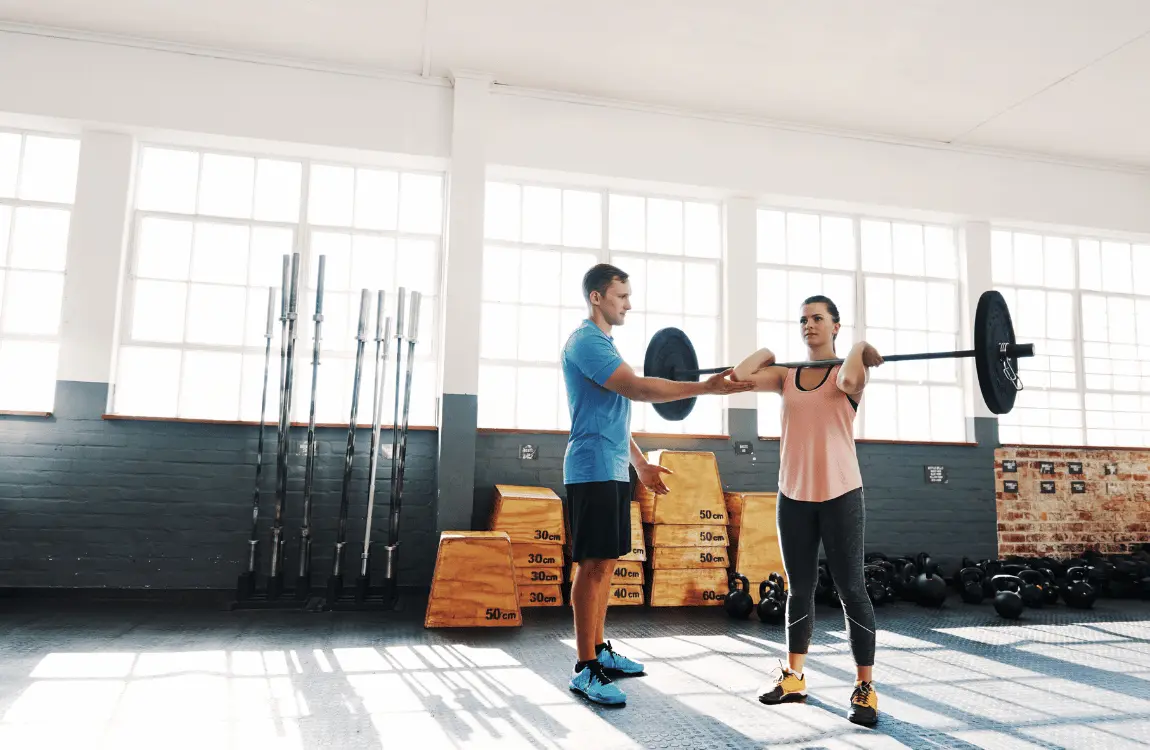
- Heavy weightlifting and Valsalva maneuver: any heavy lift where you hold your breath against a closed throat raises facial blood pressure.
- Hot yoga, saunas, and steam rooms: heat plus sweating is the worst-case combination for the migration window.
- Inverted yoga poses: downward dog, headstand, shoulder stand, and any pose that puts your head below your heart.
- Swimming face-down: the prone position alone is a problem; chlorine and pool pressure on the treated area add to it.
Exercises That Are Safe in the First 24 Hours
- Casual walking (not power walking)
- Gentle stretching that keeps your head upright
- Standing yoga (no inversions, no hot studios)
- Light upper-body mobility work as long as you are not flushing
What If I Already Exercised After Botox?
This is the most common follow-up question we get, usually in the form of a panicked phone call the morning after. The honest answer is that in most cases, nothing changes. The risk window is statistical, not deterministic. Watch for asymmetry or a partial droop one to seven days later. If you notice anything off, call our office, that is exactly what we are here for.
“Patients call panicked the next morning because they went on a run two hours after treatment. The honest answer is, in most cases, nothing happens. The risk we’re avoiding is small but real. If you notice an asymmetry or a partial droop a week later, that’s worth a follow-up, and we can usually correct it with a small touch-up.”
Dr. Michael Paltiel, MD
How Workouts Can Affect How Long Your Botox Lasts
Routine exercise does not meaningfully shorten how long Botox lasts. Heavy daily workouts and very high metabolic rates are sometimes anecdotally associated with slightly faster turnover (because the body metabolizes the toxin faster), but the effect is small and is not a reason to stop exercising.
If maintaining a smoother forehead is important to you, you can complement Botox with adjacent treatments that have different mechanisms, such as Botox for under-eye wrinkles when smiling for crow’s feet, or hyaluronic acid dermal fillers for static volume loss. The two work well together and are not affected by exercise the same way.
Bottom Line: When You Can Work Out After Botox
Wait 4 hours for light walking, 24 hours for cardio and strength training, and 48 hours for hot yoga or saunas. After that, your routine has zero impact on your Botox result, and there is no reason to skip your workouts long-term. If you are interested in other minimally-invasive cosmetic treatments or non-invasive body contouring with CoolSculpting, our team can build a combined plan at the same consultation.
Frequently Asked Questions About Working Out After Botox
Can you work out after Botox?
Yes, but not right away. Wait at least 4 hours for light activity (a casual walk, gentle stretching) and 24 hours for any strenuous exercise. After 24 hours, normal cardio and strength training are safe.
How long after Botox can you exercise?
Most board-certified dermatologists recommend waiting a full 24 hours before resuming any vigorous workout. Light walking is fine after 4 hours. Hot yoga, saunas, and inverted poses should wait 48 hours.
What happens if I work out too soon after Botox?
In most cases, nothing happens. The risk you are avoiding is product migration, where the botulinum toxin spreads to a nearby muscle before it has fully bound to the target. That can cause a temporary droop or asymmetry, which usually resolves on its own or with a small touch-up.
Does exercise make Botox wear off faster?
Routine exercise does not meaningfully shorten how long Botox lasts. Heavy daily workouts and very high metabolic rates are sometimes associated with slightly faster turnover, but the effect is small and not a reason to stop exercising.
Can I lift weights after Botox?
After 24 hours, yes. In the first 24 hours, avoid heavy lifting because the Valsalva maneuver (holding your breath against a closed throat while straining) raises facial blood pressure and can shift the product before it has bound.
Is it okay to do yoga after Botox?
Standing yoga is fine after 4 hours. Avoid inverted poses (downward dog, headstand, shoulder stand) for 24 hours, and avoid hot yoga for 48 hours, since heat and being head-down can both raise the migration risk.
Schedule Your Botox Consultation
Considering Botox at our Forest Hills office?
Adult & Pediatric Dermatology, Queens, NY. Call 718-896-3376 or contact our Forest Hills office.
This information is provided for educational purposes and is not a substitute for professional medical advice, diagnosis, or treatment. Please schedule a consultation with our team to discuss your individual needs.
Medically reviewed by Dr. Michael Paltiel, MD
Board-certified dermatologist at Adult and Pediatric Dermatology in Forest Hills, Queens, treating medical, surgical, and cosmetic skin conditions for adults and children.
Related Treatments
Questions About Your Skin? We Can Help.
Schedule a consultation with our board-certified team at our Forest Hills, Queens office.
This information is provided for educational purposes and is not a substitute for professional medical advice, diagnosis, or treatment. Please schedule a consultation with our team to discuss your individual needs.