
Medically reviewed by Dr. Michael Paltiel, MD – Board-Certified Dermatologist | 20+ Years Experience | Last Updated: February 2026
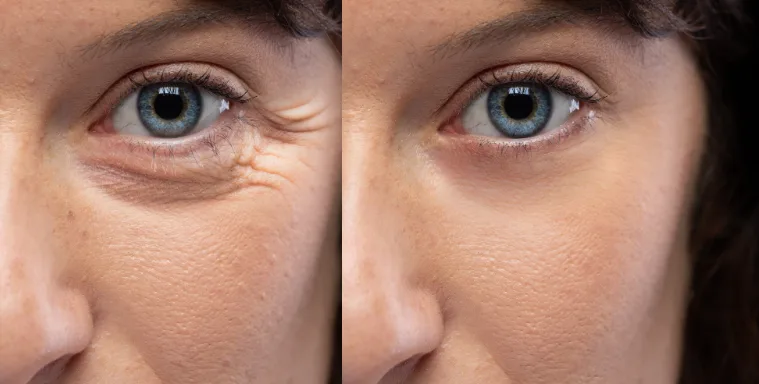
Yes, Botox is the most effective treatment for crow’s feet. It works by relaxing the muscles around the outer corners of the eyes that cause these lines when you smile, squint, or laugh. Most patients see visible smoothing within three to seven days, with full results developing over two weeks and lasting three to four months.
At Adult and Pediatric Dermatology in Forest Hills, Queens, we help patients reduce crow’s feet with precise, natural-looking Botox treatments. Dr. Michael Paltiel, a board-certified dermatologist with over 20 years of experience, uses a conservative approach to soften lines while preserving your natural expressions.
What Are Crow’s Feet?
Crow’s feet are the fine lines that radiate from the outer corners of your eyes. They are sometimes called “laugh lines” or “smile lines” because they become most visible when you make facial expressions. The medical term for these wrinkles is lateral canthal lines.
These lines form because the skin around the eyes is thinner and more delicate than skin on other parts of the face. Years of repeated facial movements, including smiling, squinting, and laughing, crease this thin skin and create visible lines.
At first, crow’s feet only appear when you make expressions. These are called dynamic wrinkles. Over time, as skin loses collagen and elasticity with age, the lines can become visible even when your face is at rest. These are called static wrinkles.
Crow’s feet are often one of the first signs of aging that people notice because the eye area shows wear earlier than other facial zones.
How Does Botox Treat Crow’s Feet?
Botox treats crow’s feet by relaxing the orbicularis oculi muscle, which is the circular muscle that surrounds your eye and controls squinting and blinking.
When you smile or squint, this muscle contracts and bunches the skin at the outer corners of your eyes, creating the characteristic fan of lines. Botox temporarily blocks the nerve signals that tell this muscle to contract. With less muscle movement, the overlying skin stops creasing and existing lines soften.
Botox is particularly effective for crow’s feet because these are primarily dynamic wrinkles caused by muscle movement. The treatment does not affect your ability to blink, see, or make natural expressions when performed correctly.
How Many Units of Botox for Crow’s Feet?
The number of Botox units needed for crow’s feet varies based on your muscle strength, wrinkle severity, and desired results.
Typical range: 5 to 15 units per side, for a total of 10 to 30 units for both eyes.
Mild crow’s feet: 5 to 8 units per side may be sufficient for patients with fine lines or those seeking subtle improvement.
Moderate to severe crow’s feet: 10 to 15 units per side may be needed for deeper lines or stronger muscles.
Men typically need more units than women because they tend to have stronger facial muscles.
Your provider will assess your specific needs during consultation and recommend the appropriate dosage. Starting conservatively and adding more at a follow-up appointment is often preferable to over-treating initially.
What to Expect During Treatment
Botox for crow’s feet is a quick, straightforward procedure with no downtime.
Before treatment: Your provider will cleanse the treatment area and may apply a topical numbing cream if you prefer, though most patients find the injections tolerable without anesthesia.
During treatment: Using a very fine needle, your provider injects small amounts of Botox into specific points around the outer eye area. Most patients receive three to five injection points per side. The procedure takes about 10 to 15 minutes.
After treatment: You can return to normal activities immediately. There is no downtime required. You may have small bumps at the injection sites that resolve within 15 to 30 minutes.
Most patients describe the sensation as a brief pinch. The eye area is sensitive, but the injections are quick and the discomfort is minimal.
When Will I See Results?
You will begin to notice improvement within three to seven days after your Botox treatment. The muscles around your eyes will gradually relax, and the lines will start to soften.
Full results typically develop by day 10 to 14. At this point, you will see the maximum smoothing effect, and your crow’s feet will be significantly less visible when you smile or squint.
If you have deep, static lines that are visible at rest, Botox will soften them but may not eliminate them completely. For these deeper lines, your provider may recommend combining Botox with other treatments such as dermal fillers or laser resurfacing.
How Long Does Botox Last for Crow’s Feet?
Botox results for crow’s feet typically last three to four months. Some patients experience results lasting up to six months, especially with consistent treatment over time.
As the Botox gradually wears off, you will notice muscle movement returning and the lines becoming visible again. This happens slowly, so you have time to schedule your next appointment before the full effect wears off.
Many patients find that with regular treatments, their results last longer over time. The muscles become trained to stay relaxed, and less Botox may be needed to maintain results.
Crow’s Feet Aftercare
Following proper aftercare helps ensure the best results and minimizes the risk of complications.
Stay upright for four hours. Avoid lying down or bending over for at least four hours after treatment to prevent Botox from migrating to unintended areas.
Do not touch or rub the area. Avoid rubbing, massaging, or applying pressure to the injection sites for 24 hours.
Skip strenuous exercise. Avoid intense workouts, hot yoga, and saunas for 24 hours after treatment.
Avoid alcohol. Skip alcoholic beverages for 24 hours to minimize swelling and bruising.
“Aftercare includes no laying down for 4 hours post injections and avoiding drinking alcohol or strenuous exercise,” notes Dr. Michael Paltiel. Following these guidelines helps ensure your Botox settles properly in the targeted muscles.
Botox vs. Fillers for Crow’s Feet
Both Botox and dermal fillers can address wrinkles around the eyes, but they work differently and are suited for different concerns.
Botox relaxes the muscles that cause dynamic wrinkles. It is ideal for lines that appear when you make facial expressions. Results take three to seven days to appear and last three to four months.
Dermal fillers add volume beneath the skin to fill in static wrinkles that are visible even at rest. Results are immediate and can last six months to two years depending on the filler type.
For most patients with crow’s feet, Botox is the preferred treatment because these lines are primarily caused by muscle movement. However, patients with very deep static lines or significant volume loss around the eyes may benefit from combining both treatments.
Your provider can assess your concerns and recommend the best approach during your consultation.
Can Botox Prevent Crow’s Feet from Getting Worse?
Yes, Botox can help prevent crow’s feet from deepening over time. By relaxing the muscles that cause these lines, Botox reduces the repetitive creasing that makes wrinkles more pronounced.
Many patients in their late 20s and early 30s start preventative Botox before crow’s feet become deeply etched. By treating dynamic wrinkles early, you can prevent them from becoming static wrinkles that are visible at rest.
Even if you already have visible crow’s feet, regular Botox treatments can prevent them from worsening and may gradually improve their appearance as the skin has time to recover from constant creasing.
Crow’s Feet Treatment at Adult and Pediatric Dermatology
At Adult and Pediatric Dermatology in Forest Hills, Queens, we specialize in natural-looking Botox treatments that smooth crow’s feet while preserving your expressions.
Board-certified expertise. Dr. Michael Paltiel is a board-certified dermatologist who completed his medical training at Johns Hopkins University School of Medicine. With over 20 years of experience in cosmetic and medical dermatology, he understands the delicate anatomy of the eye area and delivers precise, beautiful results.
Conservative approach. We believe in using the minimum effective dose for natural results. “Not if done properly and conservatively,” Dr. Paltiel says when asked if Botox will make your face look frozen. Our goal is to help you look refreshed, not overdone.
Trusted products. We use authentic Allergan Botox and Dysport, the most trusted neurotoxin brands with proven safety and effectiveness.
Personalized treatment. During your consultation, we assess your facial anatomy, discuss your goals, and create a customized treatment plan for your specific needs.
Ready to smooth your crow’s feet and look more refreshed? Call Adult and Pediatric Dermatology at 718-305-1056 or book your consultation online today.
Frequently Asked Questions
Does Botox completely remove crow’s feet?
Botox significantly reduces crow’s feet, especially dynamic lines that appear with facial expressions. Very deep static lines may soften but not disappear completely. Your provider can discuss realistic expectations during your consultation.
Can Botox make crow’s feet worse?
When performed correctly by an experienced provider, Botox does not make crow’s feet worse. In rare cases, improper injection technique can cause temporary issues, but these resolve as the Botox wears off.
At what age should I start Botox for crow’s feet?
There is no specific age to start Botox. Many patients begin in their late 20s to early 30s when they first notice lines appearing. Others start later when lines have become more pronounced. The right time depends on your individual concerns.
How much does Botox for crow’s feet cost? Crow’s feet treatment typically requires 10 to 30 units total. At $10 to $15 per unit, you can expect to pay approximately $100 to $450 for both eyes, depending on your specific needs.
Will I still be able to smile naturally after Botox for crow’s feet?
Yes, when performed by an experienced provider using appropriate doses, Botox softens crow’s feet while allowing natural facial expressions. You will still be able to smile, laugh, and express your emotions.
Disclaimer
Medically reviewed by Dr. Michael Paltiel, MD.
This content is for educational purposes only and is not intended as medical advice, diagnosis, or treatment. Please consult a qualified healthcare provider for personalized recommendations.
About the Author: Dr. Michael Paltiel, MD
Dr. Michael Paltiel is a board-certified dermatologist with over 20 years of experience practicing in Forest Hills, Queens, NY. He specializes in both medical and cosmetic dermatology at Adult & Pediatric Dermatology. Learn more about Dr. Paltiel.