
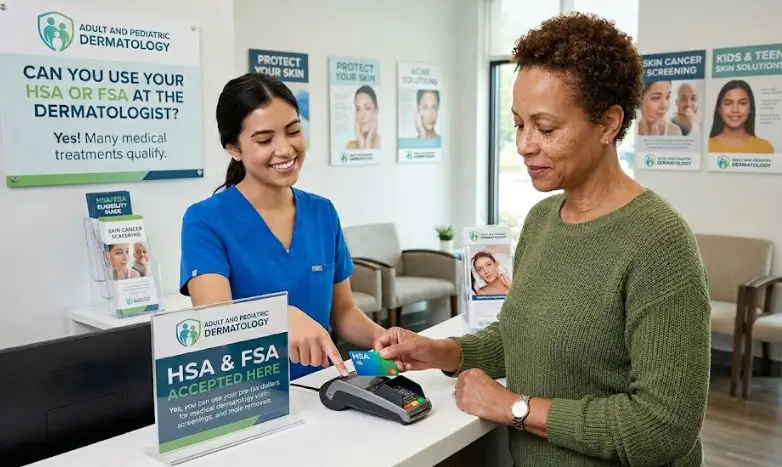
Yes, medically necessary dermatology visits, treatments, and even certain skincare products sold at your dermatologist’s office are HSA and FSA eligible. Skin cancer screenings, acne treatments, eczema care, mole and skin tag removals, medicated cleansers, and prescription-strength sunscreens can all be paid for with pre-tax health dollars. Purely cosmetic procedures like Botox, lip fillers, and laser hair removal are not covered.
If you have an HSA (Health Savings Account) or FSA (Flexible Spending Account), you may be sitting on hundreds or even thousands of dollars in pre-tax funds that can go toward your skin health. The challenge is knowing exactly which services and products qualify, and which ones do not.
“Many of our patients in Forest Hills are surprised to learn how many dermatology services and skincare products they can pay for with their HSA or FSA,” says Dr. Michael Paltiel, MD, board-certified dermatologist and founder of Adult and Pediatric Dermatology in Queens. “We get questions about this every day at the front desk.”
Below, we break down exactly what your HSA or FSA covers at the dermatologist, what is excluded, when you need a Letter of Medical Necessity, and answers to the most common patient questions, straight from a board-certified dermatologist.
Which Dermatology Visits and Treatments Are HSA/FSA Eligible?
Under IRS guidelines, any dermatology service that diagnoses, treats, or prevents a medical condition qualifies as an eligible expense. This covers the majority of what happens during a medical dermatology appointment.
Dermatology services that are typically HSA/FSA eligible include:
- Annual full-body skin cancer screenings and mole checks
- Acne evaluation and treatment (topical prescriptions, oral medications, chemical peels for active acne, light therapy)
- Eczema, psoriasis, and rosacea management
- Wart removal and skin tag removal when medically indicated
- Mole removal and biopsy for suspicious lesions
- Treatment of fungal infections, rashes, and allergic reactions
- Laser treatments for rosacea or broken capillaries when prescribed for a medical condition
- Pediatric dermatology visits for children’s eczema, warts, or other skin conditions
- Follow-up visits and diagnostic appointments
The key factor is medical necessity. If your dermatologist is treating a diagnosed skin condition, the visit and associated treatments are almost always eligible. This applies to both adult and pediatric patients, your family HSA can cover your child’s eczema treatment or wart removal just as easily as your own skin cancer screening.
Which Skincare Products Can You Buy with HSA or FSA Funds?
This is where many patients leave money on the table. Several categories of skincare products are HSA/FSA eligible, especially those sold directly through your dermatologist’s office.
Products that are generally HSA/FSA eligible:
- Sunscreens with SPF 15 or higher (including professional-grade sunscreens sold at your dermatologist’s front desk)
- Prescription acne medications and medicated cleansers
- Over-the-counter acne treatments (benzoyl peroxide washes, salicylic acid products, pimple patches)
- Medicated moisturizers for eczema, psoriasis, and dermatitis
- Scar treatment products (silicone gels, post-procedure care)
- Anti-itch creams and topical treatments for allergic reactions
- Minoxidil and other hair loss treatments when prescribed for a medical condition
“The professional sunscreens we sell at our front desk are HSA/FSA eligible,” confirms Dr. Paltiel. “Patients can use their HSA or FSA card to purchase them during their appointment. The same goes for medicated acne cleansers and moisturizers we recommend for specific conditions.”
What Is NOT Covered by Your HSA or FSA?
The IRS draws a clear line between medical treatment and cosmetic enhancement. Purely aesthetic procedures and general-use toiletries do not qualify, regardless of whether they are performed or recommended by a dermatologist.
Services and products that are NOT HSA/FSA eligible:
- Botox and Dysport for cosmetic purposes (wrinkle reduction)
- Lip fillers, dermal fillers, and facelifts
- Laser hair removal
- Cosmetic chemical peels and microdermabrasion performed solely for appearance
- Non-medicated moisturizers, general-use cleansers, and basic toiletries
- Anti-aging creams and serums without a medical diagnosis
- Vitamins and dietary supplements (including biotin for hair and skin)
The “Dual-Purpose” Gray Area: Some products serve both a cosmetic and medical purpose, for example, an anti-aging moisturizer that also contains SPF protection, or a chemical peel that treats active acne scarring. In these cases, your dermatologist can provide a Letter of Medical Necessity to document that the primary purpose is medical, which may allow your plan administrator to approve reimbursement.
What Is a Letter of Medical Necessity and When Do You Need One?
A Letter of Medical Necessity (LMN) is a document from your dermatologist that explains why a specific treatment or product is medically required for your diagnosed condition. Some HSA/FSA plan administrators require an LMN before approving reimbursement for certain expenses that fall into a gray area between medical and cosmetic.
You may need an LMN for:
- Chemical peels or light therapy used to treat medical acne (not purely cosmetic)
- Hair loss treatments like Minoxidil or scalp injections
- Clinical skincare products that have both cosmetic and medical applications
- Scar treatment following a medical procedure or injury
- Skin tag removal when it is causing irritation or discomfort
“If there is a medical reason for clinical skincare or a procedure, we will provide patients with a Letter of Medical Necessity and their HSA should cover it,” says Dr. Paltiel. “We do this regularly for our patients.”
Important: Even with a letter from your dermatologist, the final decision on any reimbursement rests with your specific plan administrator, not the clinic. Always confirm with your HSA or FSA provider before assuming coverage.
What Happens If Your HSA Card Is Declined at the Dermatologist?
A declined HSA or FSA card does not necessarily mean the service is not covered. Common reasons for a decline include insufficient funds in your account, an incorrect card number or expiration date, or the merchant category code not being recognized by your plan administrator.
If your card is declined for a service that should be covered, you have options. You can pay with a personal credit or debit card and submit a claim for reimbursement to your HSA/FSA provider afterward. Keep the itemized receipt listing the diagnosis and procedures performed, along with any supporting documentation from your dermatologist.
For clinical skincare products purchased at the office, Dr. Paltiel notes: “If there is a medical reason for the skincare, we will provide you with a letter of medical necessity and your HSA should cover it. If the card is initially declined, the letter usually resolves it with your plan administrator.”
HSA vs. FSA: Key Differences Dermatology Patients Should Know
Both HSAs and FSAs allow you to use pre-tax dollars for eligible medical expenses, but they work differently in ways that can affect how you plan your dermatology spending.
| Feature | HSA | FSA |
| Rollover | Funds roll over indefinitely, no deadline to spend | Use-it-or-lose-it, most funds expire at year-end |
| Ownership | You own it; stays with you if you change jobs | Employer-owned; typically forfeited when you leave |
| Eligibility | Requires a high-deductible health plan (HDHP) | Available with most employer health plans |
| 2026 Contribution Limits | Individual: $4,300 | Family: $8,550 | Individual: $3,300 |
| Best For | Long-term savings for ongoing dermatology care | Planned expenses within the year (screenings, treatments, products) |
FSA Tip: If you have an FSA with a use-it-or-lose-it deadline, schedule your annual skin cancer screening, stock up on eligible sunscreens and medicated skincare, or address that mole or skin tag you have been putting off, before your funds expire.
10 Real Questions Patients Ask About HSA/FSA at the Dermatologist
These are actual questions patients ask at Adult and Pediatric Dermatology in Forest Hills, Queens, answered by Dr. Michael Paltiel, board-certified dermatologist.
1. “Can I use my HSA or FSA to pay for my annual skin cancer screening?”
Yes. Annual full-body skin exams are a preventive medical service and are fully eligible under both HSA and FSA plans.
2. “Is it possible to have my Botox or Dysport treatments covered by my HSA/FSA?”
No. Botox and Dysport for cosmetic wrinkle reduction are classified as purely aesthetic treatments by the IRS and are not eligible for HSA or FSA reimbursement under any circumstances.
3. “Are the professional sunscreens sold at the front desk eligible for HSA/FSA?”
Yes. Broad-spectrum sunscreens with SPF 15 or higher are HSA/FSA eligible. The medical-grade sunscreens available at our office qualify and can be purchased directly with your HSA or FSA card.
4. “Can I use my HSA or FSA for acne-clearing procedures like chemical peels or light therapy?”
If there is medical necessity, then yes. When a chemical peel or light therapy session is prescribed specifically to treat active acne, not for general skin refreshing, it can be an eligible expense. Your dermatologist can document the medical necessity if needed.
5. “Does my HSA/FSA cover the cost of removing a mole or a skin tag?”
If there is medical necessity, then yes. Mole removal for biopsy or because a lesion is suspicious is a standard eligible expense. Skin tag removal qualifies when the skin tag is causing irritation, discomfort, or is located in an area prone to friction. A Letter of Medical Necessity may be required by your plan administrator.
6. “Can I buy my acne cleansers and medicated moisturizers using my FSA card?”
Yes. Over-the-counter acne treatments including medicated cleansers, benzoyl peroxide washes, salicylic acid products, and acne-specific moisturizers are HSA/FSA eligible. You can purchase these with your FSA card at our office.
7. “Are laser treatments for rosacea or broken capillaries eligible for reimbursement via HSA/FSA?”
Yes. When laser treatment is prescribed to manage a medical condition like rosacea or visible broken capillaries (telangiectasia), it is considered a medically necessary procedure and is typically eligible.
8. “Is my child’s eczema treatment or wart removal covered by my family HSA?”
Yes. Pediatric dermatology visits, including eczema management and wart removal, are eligible medical expenses. Your family HSA covers qualified medical expenses for all dependents, including children.
9. “Can I use my funds for hair loss treatments like Minoxidil or scalp injections?”
If there is medical necessity, then yes. Hair loss treatments prescribed by a dermatologist for a diagnosed condition such as androgenetic alopecia or alopecia areata may qualify. A Letter of Medical Necessity will typically be required.
10. “What happens if my HSA card is declined when I try to pay for my clinical skincare?”
If there is a medical reason for the clinical skincare, we will provide you with a Letter of Medical Necessity and your HSA should cover it. You can pay with a personal card at the time of purchase and submit for reimbursement with the letter and your receipt.
Quick-Reference: What’s Covered vs. What’s Not
| ✅ HSA/FSA ELIGIBLE | ❌ NOT ELIGIBLE |
| Skin cancer screenings | Botox / Dysport (cosmetic) |
| Acne treatments & prescriptions | Lip fillers & dermal fillers |
| Eczema & psoriasis care | Laser hair removal |
| Mole & skin tag removal (medical) | Facelifts & cosmetic surgery |
| Sunscreen (SPF 15+) | Anti-aging creams (no diagnosis) |
| Medicated cleansers & moisturizers | General toiletries & soap |
| Rosacea laser treatment | Cosmetic chemical peels |
| Children’s dermatology visits | Vitamins & supplements |
| Hair loss Rx (with LMN) | Cosmetic microdermabrasion |
Maximize Your HSA/FSA Benefits at Adult and Pediatric Dermatology in Forest Hills, Queens
At Adult and Pediatric Dermatology, we accept HSA and FSA payments for eligible medical dermatology services and products. Our team helps patients navigate their benefits so they can make the most of their pre-tax health dollars.
Why Patients in Queens Trust Dr. Paltiel and the APD Team:
- Dr. Michael Paltiel, MD, board-certified dermatologist, Johns Hopkins Medical School graduate, University of Maryland residency, 17+ years of experience
- Full team includes Zina Goldvekht, PA-C; John A. Perrotti, MD, board-certified plastic surgeon; and Aleksey Babakhanov, FNP, board-certified family nurse practitioner
- Treats infants, children, adolescents, and adults, comprehensive care for the whole family
- 24-hour answering service with online and phone scheduling for maximum accessibility
- Located in the Forest Hills neighborhood of Queens at 64-05 Yellowstone Blvd, CFU 101
What Patients Say:
“Great service. Front desk people are very kind. Neat office. Loved the doctor and the entire experience.”
“Amazing service, very professional and experienced.”
“Very clean facility. Very thorough physician. Great bedside manner. Listened to my concerns.”
“My insurance didn’t even clear me yet but Dr. Paltiel took care of me anyway and took care of it. Thank you.”
Ready to put your HSA or FSA dollars to work for your skin health? Schedule your consultation at Adult and Pediatric Dermatology today. Call 718-896-3376 or book online at adultandpediatricdermatology.com.
Disclaimer
Medically reviewed by Dr. Michael Paltiel, MD.
This content is for educational purposes only and is not intended as medical advice, diagnosis, or treatment. Please consult a qualified healthcare provider for personalized recommendations.