
Medically reviewed by Dr. Michael Paltiel, MD, Board-Certified Dermatologist | 20+ Years Experience | Last Updated: February 2026
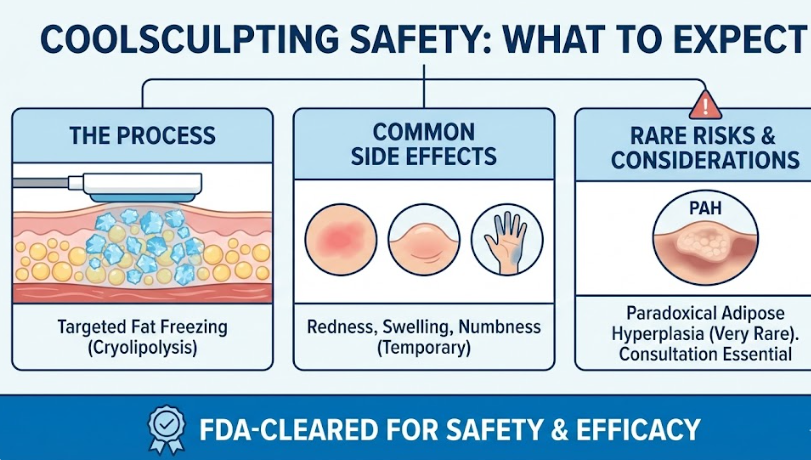
Yes, CoolSculpting is safe. It is FDA-cleared with over 11 million treatments performed worldwide since 2010. The procedure is non-invasive, requires no anesthesia or incisions, and has no downtime. Most side effects are mild and temporary, including redness, swelling, and numbness that typically resolve within days to weeks. At Adult and Pediatric Dermatology in Forest Hills, Queens, our board-certified medical team has safely performed numerous CoolSculpting treatments with excellent patient outcomes.
CoolSculpting’s safety profile is one of its primary advantages over surgical fat reduction options like liposuction. There are no surgical risks, no anesthesia complications, and no recovery period. Patients can return to work and normal activities immediately after treatment. While no medical procedure is completely without risk, CoolSculpting’s risks are rare and well-documented, allowing patients to make informed decisions.
Why CoolSculpting Is Considered Safe
CoolSculpting has an established safety record backed by science, regulatory approval, and years of real-world experience.
FDA-cleared since 2010. The U.S. Food and Drug Administration has cleared CoolSculpting for fat reduction in nine body areas after reviewing clinical evidence of its safety and effectiveness. FDA clearance requires demonstration that the benefits outweigh the risks for the intended use.
Over 11 million treatments performed. CoolSculpting is one of the most popular non-surgical body contouring treatments in the world. This extensive treatment history provides substantial data on safety outcomes.
Non-invasive with no anesthesia. Unlike liposuction, CoolSculpting requires no incisions, no needles in the treatment area, and no anesthesia. This eliminates the risks associated with surgery, including infection, scarring, blood clots, and anesthesia complications.
Controlled, precise technology. The CoolSculpting device delivers precisely controlled cooling to the fat layer without harming skin, muscles, nerves, or other tissues. Fat cells are more sensitive to cold than surrounding structures, which is why targeted fat destruction is possible.
Outpatient procedure with no downtime. You can drive yourself to and from your appointment and return to work or normal activities immediately. There is no recovery period that puts you at risk for complications.
“CoolSculpting is an FDA-cleared body contouring treatment that we have performed successfully on numerous patients,” explains Dr. Michael Paltiel, Board-Certified Dermatologist at Adult and Pediatric Dermatology. “The technology precisely targets fat layers while leaving surrounding tissues unharmed. For the right candidate, it offers a safe, effective way to sculpt specific areas without surgery or downtime.”
Does CoolSculpting Hurt?
Most patients tolerate CoolSculpting well and do not describe it as painful.
The first few minutes feel intensely cold. When the applicator begins cooling your skin and fat, you will feel a strong cold sensation. This is the most uncomfortable part of the treatment for most patients.
The area goes numb within five to ten minutes. As the treatment area cools, it becomes numb and the cold sensation fades. Once numbness sets in, most patients feel comfortable and relaxed.
You can read, work, or relax during treatment. After the initial cooling phase, many patients read books, scroll on their phones, work on laptops, or even nap. The experience is manageable enough that people schedule CoolSculpting during lunch breaks.
The post-treatment massage may feel uncomfortable. After the applicator is removed, your provider massages the treated area for about two minutes to break up the frozen fat cells. Because the area is cold and beginning to rewarm, this massage can feel uncomfortable. The discomfort typically lasts only a few minutes.
No anesthesia is required. The procedure is tolerable without any numbing medication. If you are particularly sensitive to cold or discomfort, let your provider know, and they can help ensure you are as comfortable as possible.
“Initially a patient will feel some cold followed by some mild pins and needle sensation,” notes our clinical team. “About five minutes into the treatment, the area typically goes numb altogether and is very comfortable.”
Common CoolSculpting Side Effects
Most CoolSculpting side effects are mild, temporary, and resolve on their own within days to weeks.
Redness at the treatment site is common immediately after treatment. The skin may look pink or red where the applicator was placed. This typically fades within a few hours to a day.
Swelling is a normal response to the treatment. The treated area may appear slightly puffy or swollen for one to two weeks. This is part of your body’s inflammatory response as it begins processing the frozen fat cells.
Bruising occurs in some patients, possibly due to the suction from the applicator. Bruises typically fade within one to two weeks.
Tenderness or sensitivity in the treated area is common for the first few days. The area may feel sore to the touch, similar to how muscles feel after an intense workout.
Tingling or numbness can persist for several weeks after treatment. As the nerves in the treated area recover from the cold exposure, you may experience tingling, pins and needles, or reduced sensation. This resolves on its own.
Cramping or aching in the treated area is reported by some patients in the days following treatment. Over-the-counter pain relievers can help if needed.
Itchiness may occur as the area heals. Gentle moisturizing can help soothe any itching.
All of these side effects are considered normal and expected. They do not require medical intervention and resolve naturally as your body heals.
Rare CoolSculpting Side Effects and Risks
While CoolSculpting is considered safe, rare side effects can occur. Being informed about these risks allows you to make an educated decision.
Paradoxical Adipose Hyperplasia (PAH) is the most discussed rare side effect. PAH occurs when fat in the treated area increases in size rather than decreasing. Instead of shrinking, the frozen fat cells enlarge, creating a visible bulge. PAH is rare, occurring in approximately 0.0051% of treatments, or roughly 1 in 20,000 treatments according to manufacturer data. If PAH occurs, it typically appears two to five months after treatment and does not resolve on its own. Treatment requires liposuction to remove the enlarged fat.
Late-onset pain affects some patients who experience significant discomfort days to weeks after treatment. This pain can be more intense than the typical post-treatment soreness and may require prescription pain management.
Prolonged numbness can occasionally last longer than the typical few weeks. In rare cases, reduced sensation in the treated area may persist for several months before fully resolving.
Hyperpigmentation or skin darkening in the treated area is rare and more likely in patients with darker skin tones. This typically resolves over time.
Freeze burn is extremely rare but theoretically possible if the skin is not properly protected during treatment. Experienced providers using proper technique virtually eliminate this risk.
The key to minimizing rare risks is choosing an experienced, qualified provider who uses genuine CoolSculpting equipment and follows proper protocols.
How to Ensure a Safe CoolSculpting Experience
Choosing the right provider significantly impacts your safety and results.
Select a board-certified provider. Dermatologists and plastic surgeons with board certification have completed extensive training and demonstrated expertise in procedures affecting the skin and body. Their medical knowledge helps ensure proper patient selection and treatment technique.
Verify they use genuine CoolSculpting equipment. Some discount providers use off-brand fat freezing devices that have not undergone the same rigorous testing and FDA clearance as CoolSculpting. Genuine CoolSculpting technology has built-in safety features and precisely controlled cooling.
Have a thorough consultation before treatment. A quality provider will assess whether you are a good candidate, review your medical history, discuss realistic expectations, and explain potential risks. Be wary of any practice that rushes you into treatment without this evaluation.
Disclose your complete medical history. Tell your provider about all medical conditions, medications, and any previous cosmetic procedures. Certain conditions are contraindications for CoolSculpting.
Ask about the provider’s experience. How many CoolSculpting treatments have they performed? What is their complication rate? Experienced providers have refined their technique and can optimize your treatment for safety and results.
Choose a medical setting over a mall kiosk. CoolSculpting is a medical procedure that should be performed in a proper clinical environment with trained medical professionals, not by technicians in a retail setting.
At Adult and Pediatric Dermatology, every CoolSculpting treatment is overseen by our board-certified dermatology team. We use genuine CoolSculpting Elite technology and follow all safety protocols to protect our patients.
Who Should Not Get CoolSculpting?
Certain medical conditions make CoolSculpting unsafe. You should NOT undergo CoolSculpting if you have:
Cryoglobulinemia is a condition where abnormal proteins in your blood thicken in cold temperatures, potentially causing tissue damage and organ problems. Cold exposure from CoolSculpting could trigger a dangerous reaction.
Cold agglutinin disease causes your immune system to attack red blood cells when exposed to cold temperatures. CoolSculpting could trigger hemolytic anemia in patients with this condition.
Paroxysmal cold hemoglobinuria is a rare type of anemia where red blood cells are destroyed in cold temperatures. The cold exposure from CoolSculpting is contraindicated.
Cold urticaria causes hives, itching, and swelling when skin is exposed to cold. CoolSculpting could trigger a significant allergic-type reaction.
Raynaud’s phenomenon affects blood flow in response to cold, causing fingers and toes to turn white or blue. While Raynaud’s primarily affects extremities, patients with this condition should discuss CoolSculpting with their doctor.
You should also avoid CoolSculpting if you:
Are pregnant or nursing. The effects of CoolSculpting on pregnancy are not studied, so treatment is not recommended during pregnancy or breastfeeding.
Have a hernia in or near the treatment area. The suction from the applicator could worsen a hernia.
Have had recent surgery in the treatment area. Wait until you are fully healed before considering CoolSculpting.
Have open wounds, rashes, or skin conditions in the treatment area. The skin should be healthy and intact.
During your consultation, we review your medical history to confirm CoolSculpting is safe for you.
CoolSculpting Recovery: What to Expect After Treatment
CoolSculpting requires no formal recovery period, but knowing what to expect helps you feel prepared.
Immediately after treatment: You can drive yourself home and return to work or normal activities right away. There is no need for rest or recovery time. Some patients schedule CoolSculpting during their lunch break and return to work afterward.
The first few days: You may notice redness, swelling, bruising, or tenderness in the treated area. These are normal responses and do not prevent normal activities. Wearing loose, comfortable clothing can help if the area feels sensitive.
The first few weeks: Swelling gradually subsides. Some numbness or tingling may persist but should improve steadily. You may begin noticing early changes in the treated area.
Avoid strenuous exercise for 24 to 48 hours. While not strictly required, giving your body a brief rest from intense physical activity can help with comfort.
Stay hydrated. Drinking plenty of water may help your body process and eliminate the destroyed fat cells.
Maintain healthy habits. Continue eating well and exercising. CoolSculpting eliminates fat cells, but remaining fat cells can still expand if you gain weight.
Follow up as recommended. Your provider may schedule a follow-up appointment to assess your results and determine if additional sessions would be beneficial.
Safe CoolSculpting at Adult and Pediatric Dermatology in Queens
At Adult and Pediatric Dermatology in Forest Hills, patient safety is our top priority. We have performed numerous CoolSculpting treatments with excellent outcomes and a strong safety record.
Why patients trust us for safe CoolSculpting:
Dr. Michael Paltiel leads our practice as a Board-Certified Dermatologist who trained at Johns Hopkins University School of Medicine. With over 20 years of experience in medical and cosmetic dermatology, he brings expertise that ensures your safety.
We are a medical practice, not a med spa. Our team includes board-certified medical professionals who understand anatomy, recognize contraindications, and can handle any concerns that arise during or after treatment.
We use genuine CoolSculpting Elite technology with built-in safety features and precisely controlled cooling. We do not use off-brand devices.
We conduct thorough consultations before every treatment. We review your medical history, assess your candidacy, discuss realistic expectations, and explain all potential risks so you can make an informed decision.
Our Forest Hills location has served the Queens community for over 20 years. We maintain a 4.7 star rating from over 1,000 Google reviews, reflecting our commitment to excellent patient care.
“Very clean facility. Very thorough physician. Great bedside manner. Listened to my concerns. Recommended,” writes one Google reviewer. Another shares, “Amazing service, very professional and experienced.”
If you are considering CoolSculpting and want to ensure a safe experience with qualified medical professionals, schedule a consultation with our team.
Frequently Asked Questions About CoolSculpting Safety
Is CoolSculpting safer than liposuction?
CoolSculpting avoids the risks of surgery, including anesthesia complications, infection, blood clots, and scarring. Liposuction requires incisions and often general anesthesia, which carries inherent risks. For patients seeking fat reduction without surgical risk, CoolSculpting offers a safer alternative. However, liposuction removes more fat in a single procedure, so the best choice depends on your goals.
Can CoolSculpting damage organs?
No. CoolSculpting only affects the fat layer directly beneath your skin (subcutaneous fat). The cooling does not penetrate deep enough to reach internal organs. The technology is designed with sensors and controls that prevent the skin from getting too cold.
What is paradoxical adipose hyperplasia (PAH)?
PAH is a rare side effect where fat in the treated area increases rather than decreases. It occurs in approximately 1 in 20,000 treatments. PAH typically appears two to five months after treatment as a firm, enlarged area. It does not resolve on its own and requires liposuction to correct.
How do I know if I am having a bad reaction?
Mild redness, swelling, bruising, and numbness are normal. Contact your provider if you experience severe pain that does not respond to over-the-counter medication, signs of infection (fever, increasing redness, pus), skin changes such as blistering or discoloration, or a growing lump in the treated area months after treatment.
Is CoolSculpting safe for older adults?
Age alone is not a contraindication for CoolSculpting. The procedure is safe for healthy adults at any age. However, older patients should discuss their complete medical history during consultation to ensure no contraindications exist.
Can I get CoolSculpting if I have a medical condition?
Many medical conditions do not prevent CoolSculpting. However, certain conditions, particularly those affecting your response to cold, are contraindications. Disclose all medical conditions during your consultation so your provider can determine if CoolSculpting is safe for you.
Disclaimer
Medically reviewed by Dr. Michael Paltiel, MD.
This content is for educational purposes only and is not intended as medical advice, diagnosis, or treatment. Please consult a qualified healthcare provider for personalized recommendations.
About the Author: Dr. Michael Paltiel, MD
Dr. Michael Paltiel is a board-certified dermatologist with over 20 years of experience practicing in Forest Hills, Queens, NY. He specializes in both medical and cosmetic dermatology at Adult & Pediatric Dermatology. Learn more about Dr. Paltiel.